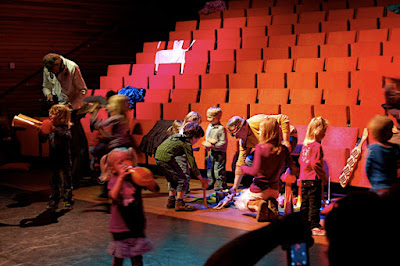
original recipe specially developed for the Nose Painting workshop by Kristina Andersen and Maki Ueda
[How to make the base components]for 12 x 100ml paint
(1) 1200ml milk (volle melk)
(2) corn starch (maizena) 20g, solution in 40ml cold milk
(3) 4 tea spoons citric acid (citroenzuur) - often available at tropical supermarket, lemon juice can possibly replace this
Heat (1) slowly on low heat.
Prepare (2), and pour (1) into (2) before reaching its boiling temperature, and mix them well.
Pour it back to the pan and put it on low heat.
Keep stirring until it gets soup-like texture. (It will get vla-like texture when it becomes cold.)
Stop heating, and add (3) little by little.
Separate it to 12 x 100 ml
 [Adding the spice]
Add 1 to 2 table spoons ground herb/spice.
Adjust the texture - if it's too stiff add some more milk.
 [Good tips]
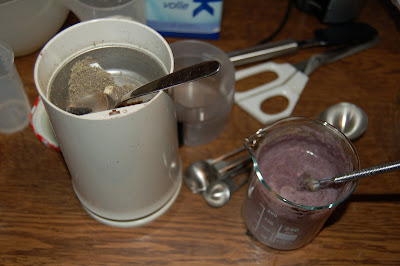
* The spice smells stronger when it's freshly ground.
* Roasting the spices briefly on the low heat just before grounding gives even the better results.
* For grinding spices, you can use the coffee mill in stead of the mortal.
* By some of the herbs like lavender / green tea / calendula, a pinch of burnt alum (aluin in Dutch) is good to add. It's used often for dyeing, and it functions as a color amplifier. For example, the lavender paint would become pink with the alum, but it is gray without it. I've used the potassium alum that's commonly used in the Japanese kitchen for pickling.

(Left: with alm Right: without alm)
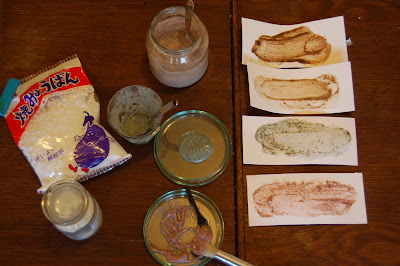
(The package on the left is the alum that has been used.)
* Because of adding (3) citric acid, the pH becomes about 2 which is a kind of enough to prevent the color changing by the oxidization. In other words, the color wouldn't stay stable without (3). Think about the basil pesto - if you leave it for 1 night, the green color becomes totally brown on the surface.

(The citric acid is added in the center. The lavender color changes to pink because of the reaction.)
[spices used in the workshop]The composition is being based on the speculaas herbs (cinnamon, nutmeg, clove, ginger, cardamon, aniseed). Then the balance and the variety in scents are respected; flowers to leaves, spices to herbs, Western and Eastern, top notes to base notes etc etc. Also the color was one of the factor.
- lavender (lavendel)
- green cardamon (kardemon)
- green tea Sencha (groene thee Sencha)
- coriander seed (korianderzaad)
- vanilla (vanille)
- juniper berry (jeneverbes)
- cinnamon (kaneel)
- star anise (steranijs)
- kentjoer
- kaffir lime leaves
- violets 3 colors (viooltjes 3 kleuren)
- aniseed (anijszaad)
- fennel seed (venkelzaad)
- clove buds (kruidnagel)
- nutmeg (nootmuskaat)
- ginger (gember)
- calendula flower (goudsbloem)
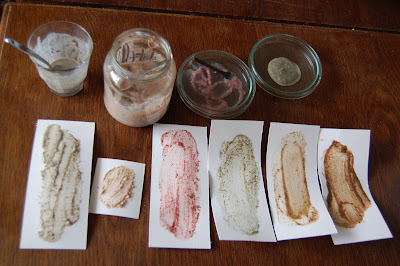
(This is all the lavender paints... what to add is quite essential for its color clearly.)