2.5.08

exhibition - if there ever was

For the opening of the exhibition If there ever was
I've just been to Sunderland, U.K.


Everyone was enthusiastic about the exhibition.
BBC review

I'm very happy haw it's installed. I've never seen before such an art exhibition with no artifacts!

25.4.08

If there ever was

Hello friends,

I'm participating in a quite unique exhibition that only consists of the smells. It's about extinct and impossible smells.

What I've made for this exhibition was the scent of Stasi Smell Jar - the scent of a citizen of East Germany that was captured his/her body odor without being aware of it. You can view the extraction and composition process on the following page:
If There Ever Was

The catalogue comes out with the smells printed on it. Please read further information below about the exhibition and the catalogue.

Best,
Maki Ueda


If there ever was:

an exhibition of extinct and impossible smells


Opening: Tuesday, 29 April 6-8 pm
Artist talk: Tuesday, 29 April 5-6 pm
Draw What You Smell: Tuesday, 20 May 1-3 pm
Exhibition continues: 30 April – 6 June 2008

Artists include:

Kóan Jeff Baysa, Mark Buxton, Bertrand Duchaufour, Christoph Hornetz, Christophe Laudamiel, Patricia Millns, Steven Pearce, David Pybus - Scents of Time, Geza Schön, Sissel Tolaas, and Maki Ueda

Reg Vardy Gallery is proud to host If There Ever Was: an exhibition of extinct and impossible smells.

In his book of essays entitled, Late Night Thoughts on Listening to Mahler’s Ninth Symphony, the physician Lewis Thomas wrote, “The act of smelling something, anything, is remarkably like the act of thinking itself.” And it is with this appreciation of smell as comparable to thought and interpretation that the exhibition If There Ever Was considers scent as integral to the perception of abstraction and representation.

Scent is the essence of physical presence and lends proof to our surroundings. Contrastingly, the fourteen scents re-created for If There Ever Was are inspired by absence. Like a cabinet of intangible curiosities, their forms are drawn from disparate stories throughout history for which few, if any, objects remain. And although it would be easy to pass the exhibition off as a work of pure fantasy—the product of an over-active perfumer’s imagination—beneath the olfactory theatricality lies a serious scientific basis, says James Wong, a botanist at Botanic Gardens Conservation International, UK.

For the exhibition, Wong helped to re-create the bouquet of four extinct flowering plants by trawling through an extensive list of extinct flowers to identify entries that were closely related to existing scented species. He then combined historical reports of how these extinct plants smelt, with the fragrance of their living relatives, to remix the specific ancient aroma.

From the acrid surface of the sun to the atomic blast at Hiroshima, visitors to the exhibition will be able to experience scents produced by the most renowned fragrance designers in the world.

A book of smells accompanies the exhibition, ISBN: 978-0-9557478-0-9. This hardback publication is on sale at Reg Vardy Gallery (rrp £12.00) and is distributed by Cornerhouse, www.cornerhouse.org. If There Ever Was: a book of extinct and impossible smells is published by Art Editions North.

This exhibition is sponsored by the gas distribution company Northern Gas Networks, which runs north east England’s gas emergency service and uses scent to help people detect gas leaks.

The following fragrance houses have generously donated to this exhibition: International Flavors & Fragrances, Symrise, and Givaudan.

Reg Vardy Gallery is open: Tuesday 10 am to 8 pm, Wednesday to Friday 10 am to 6 pm and Saturday by appointment. For more information please call 0191 515 2128, email robert.blackson@sunderland.ac.uk

from the site:
Reg Vardy Gallery

17.4.08

The Body Odor as the Outer Skin

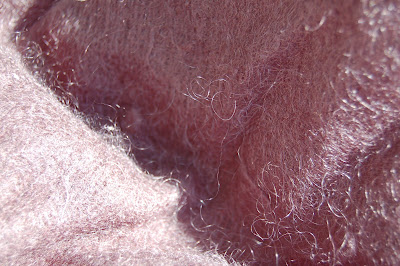
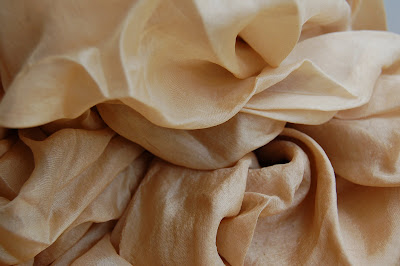
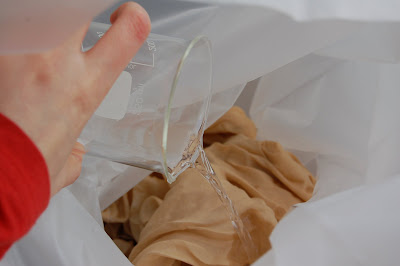
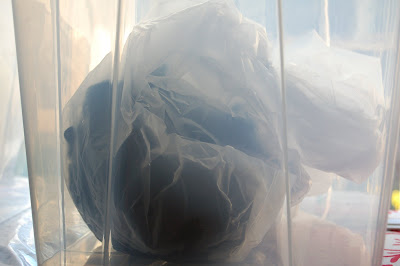
The Amsterdam-based dance company EG | PC has asked me to extract the body odor from the costumes of the dancers. The extracted essence will be presented as a perfume during the Holland Festival 2008.


Extracting the body odor is quite well known concept and done by many people in the past; for example, the former East Germany secret police Stasi has been capturing the body odor of the citizens to make a sort of scent archive that can be used for tracing a person.

I myself became more aware of the body odor, and actually the sense of smell in general, when I gave a birth in 2004. It's quite well known that the new born baby can already locate where the mother's nipple is by the sense of smell. My body odor for the baby was the lifeline, and his odor was for me the happiness itself. Gradually his odor changed and he started to smell like a sweaty kid. I regret now that I didn't capture his sweet, milky baby odor.

Since then I've started extracting and capturing the scents of the daily life like food and drink, material, person, and the environment. It's also for me the way to explore the culture. Until now I've been developing the different extraction techniques, and it still never ends.

By the way, what comes up in your mind when you think of the odor of a person? The odor of the armpit, or the odor of the foot? Quite remarkable, but they are just the parts. Besides them you are also smelling the skin, a perfume that the person is wearing, and a perfume that is in the shampoo or body lotion. You also smell, together with the sweat, the material of the clothes; the wool has the animalic smell, and the linen has the woody natural smell.

In this work I target on such total odor that the components are indivisible to each other.The extracts are "the body odor as the outer skin", as the working title.

15.4.08

once more

Hearing that the microencapsulation of the fragrance oil for the exhibition "If There Ever Was" was not successful, I have tried to make the stronger extract with the higher temperature (70 - 80 degrees) this time.


Perhaps I'd be the only one in this exhibition who is making the extract from the scratch...

11.3.08

kids workshop - Painting with the Nose - Babelut Festival 2008

a workshop by Kristina Andersen and Maki Ueda
Babelut Festival 2008, Neerpelt Belgium


It's a 30 minutes workshop for the kids age 1.5 to 3. The workshop consists of two parts: first half is about making the smelly paint with the spices and herbs, and the kids make the smelly paintings in the second half.

First we grind the spices and herbs like cardamon, lavender, and star anise into powder with a mortal. As they are ground, the room is filled with the delicious scents.


"Wow, look! There's the black seeds in the green peel... doesn't it smell great?"
"What does it smell of? Don't you think of the sweets?"


Then we add the custom-made paint base. It's made with the milk, cornstarch, and citric acid etc. (detailed recipe)


We are now ready to paint.


We had already prepared 16 different scented paints beforehand, and they are now to be used too.

* lavender (lavendel)
* green cardamon (kardemon)
* green tea Sencha (groene thee Sencha)
* coriander seed (korianderzaad)
* vanilla (vanille)
* juniper berry (jeneverbes)
* cinnamon (kaneel)
* star anise (steranijs)
* kentjoer
* kaffir lime leaves
* violets 3 colors (viooltjes 3 kleuren)
* aniseed (anijszaad)
* fennel seed (venkelzaad)
* clove buds (kruidnagel)
* nutmeg (nootmuskaat)
* ginger (gember)
* calendula flower (goudsbloem)


After finishing painting, the kids take the paintings back home together with the memories of the scents smelled in the workshop.


Most of the kids were interested in mixing the different scents on the paper, but this boy was totally obsessed by ginger. Perhaps he particularly liked the scent.


"Wow it looks like a poop!"
The parents also seem to have enjoyed the workshop very much.

If you close your eyes, you can actually trace the intensity of the scent with your nose. So it's like a map for your nose.

10.3.08

recipe of the scented paint

original recipe specially developed for the Nose Painting workshop by Kristina Andersen and Maki Ueda

[How to make the base components]

for 12 x 100ml paint

(1) 1200ml milk (volle melk)
(2) corn starch (maizena) 20g, solution in 40ml cold milk
(3) 4 tea spoons citric acid (citroenzuur) - often available at tropical supermarket, lemon juice can possibly replace this

Heat (1) slowly on low heat.
Prepare (2), and pour (1) into (2) before reaching its boiling temperature, and mix them well.
Pour it back to the pan and put it on low heat.
Keep stirring until it gets soup-like texture. (It will get vla-like texture when it becomes cold.)
Stop heating, and add (3) little by little.
Separate it to 12 x 100 ml


[Adding the spice]

Add 1 to 2 table spoons ground herb/spice.
Adjust the texture - if it's too stiff add some more milk.


[Good tips]

* The spice smells stronger when it's freshly ground.

* Roasting the spices briefly on the low heat just before grounding gives even the better results.

* For grinding spices, you can use the coffee mill in stead of the mortal.

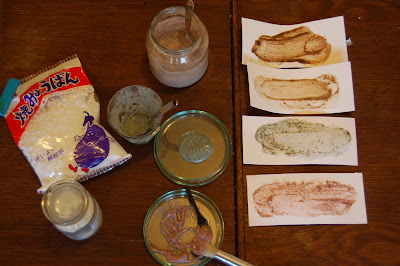
* By some of the herbs like lavender / green tea / calendula, a pinch of burnt alum (aluin in Dutch) is good to add. It's used often for dyeing, and it functions as a color amplifier. For example, the lavender paint would become pink with the alum, but it is gray without it. I've used the potassium alum that's commonly used in the Japanese kitchen for pickling.


(Left: with alm Right: without alm)


(The package on the left is the alum that has been used.)

* Because of adding (3) citric acid, the pH becomes about 2 which is a kind of enough to prevent the color changing by the oxidization. In other words, the color wouldn't stay stable without (3). Think about the basil pesto - if you leave it for 1 night, the green color becomes totally brown on the surface.


(The citric acid is added in the center. The lavender color changes to pink because of the reaction.)

[spices used in the workshop]

The composition is being based on the speculaas herbs (cinnamon, nutmeg, clove, ginger, cardamon, aniseed). Then the balance and the variety in scents are respected; flowers to leaves, spices to herbs, Western and Eastern, top notes to base notes etc etc. Also the color was one of the factor.

  • lavender (lavendel)
  • green cardamon (kardemon)
  • green tea Sencha (groene thee Sencha)
  • coriander seed (korianderzaad)
  • vanilla (vanille)
  • juniper berry (jeneverbes)
  • cinnamon (kaneel)
  • star anise (steranijs)
  • kentjoer
  • kaffir lime leaves
  • violets 3 colors (viooltjes 3 kleuren)
  • aniseed (anijszaad)
  • fennel seed (venkelzaad)
  • clove buds (kruidnagel)
  • nutmeg (nootmuskaat)
  • ginger (gember)
  • calendula flower (goudsbloem)


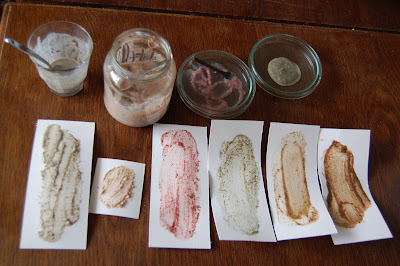
(This is all the lavender paints... what to add is quite essential for its color clearly.)

5.3.08

The Stasi Smell Jar

For the exhibition If There Ever Was taking place at Reg Vardy Gallery in Sunderland, U.K., I've been composing the scent of a woman whose scent has been captured in The Stasi Smell Jar because she was a possible spy suspected by the Eastern German secret police. This exhibition consists only of the scents.

When I think about the human odor, there are two approaches. One is the realistic expressionism, and the other is the abstract expressionism, comparable to those of paintings.

The East German authority Stasi captured and stored thousands of their citizens' scents in glass jars. I consider this as the realistic expressionism, because they wanted to capture the original scent as precise as possible.

Good example of the abstract expressionism could be the perfume
"David Beckham Instinct - For Him". The fragrance does not smell at all of Beckham's sweat or whatever that could be, but of bergamot and spices just like the consumer fragrances. By wearing this, one feels like the superstar Beckham in his imagination.

My ambition for the exhibition "If There Ever Was" is to create something in between them: real, but fiction.


The most of the components are self-made.


The composed scent will be put in the scent cartridge, and it'll function as an atomizer during the exhibition. Also the scent will be printed "scratch & sniff" as a catalogue of the exhibition.